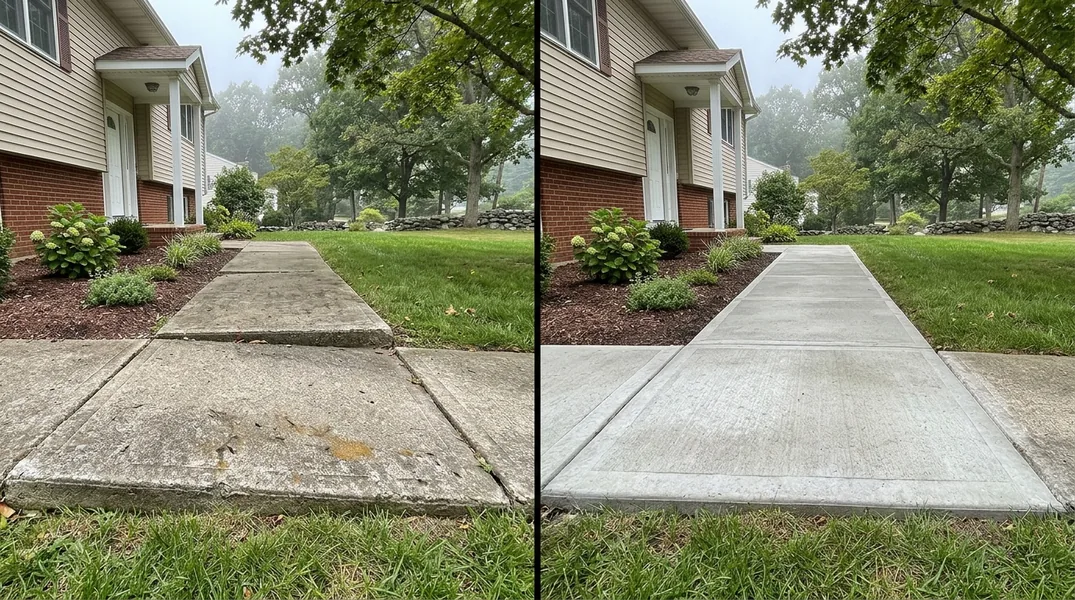
The Perfect Storm: Why Bridgeport's Climate Is Brutal on Concrete
If you own a home or business in Bridgeport, you've probably noticed that your concrete doesn't last as long as you'd hoped. Cracks appear. Surfaces spall and flake. Stains spread. The culprit isn't poor installation or cheap materials, though those matter. The real enemy is geography and climate combined.
Bridgeport sits in southwestern Connecticut, where winters are cold enough to freeze, springs are wet enough to thaw, and road maintenance crews apply salt liberally. This isn't a coincidence. The region's geology and seasonal patterns create conditions that concrete simply wasn't designed to withstand indefinitely. Understanding these forces helps explain why Concrete Repair and Resurfacing is such a common service in our area, and why prevention matters more than most homeowners realize.
Freeze-Thaw Cycles: How Winter Destroys Concrete from Within
The freeze-thaw cycle is concrete's worst enemy in New England. Here's how it works: water seeps into tiny pores and cracks within the concrete. When temperatures drop below 32 degrees Fahrenheit, that water freezes and expands. Ice takes up about 9 percent more volume than liquid water, creating internal pressure that pushes outward against the concrete matrix. When the temperature rises above freezing, the ice melts, water drains away, and a small void is left behind. Repeat this cycle dozens of times each winter, and those voids accumulate, weakening the concrete layer by layer.
This damage isn't always visible at first. You might notice it as a hairline crack that grows wider each year, or as surface scaling where the top layer begins to peel away in flakes and chunks. In severe cases, entire sections of a Concrete Driveway can become unstable. The problem accelerates if water can pool on the surface, because standing water has more time to seep in before the next freeze. Poor drainage, cracks, and low spots all contribute to faster deterioration in Bridgeport's freeze-thaw environment.
Road Salt and Concrete Scaling: The Chemical Attack
Road salt is applied to Bridgeport streets and sidewalks to melt ice and improve traction. While it works well for that purpose, salt is devastating to concrete. When salt dissolves in water and penetrates the concrete surface, it lowers the freezing point of water within the pores. This means ice can form and reform at slightly different temperatures, creating additional expansion and contraction stress. Salt also chemically reacts with the cement paste that binds concrete together, breaking down its integrity over time.
The result is a phenomenon called scaling, where the surface of the concrete spalls off in thin layers. You'll see this most often on driveways and parking lots where snow is plowed and salt is applied repeatedly. The damage tends to be worst in areas closest to the road edge, where salt spray and runoff concentrate. Even if your driveway isn't directly salted, salt-laden spray from passing vehicles can reach it. This is why homeowners in Bridgeport often see their concrete deteriorate faster than those in warmer, drier climates, and why Concrete Repair and Resurfacing becomes necessary sooner than expected.
Glacial Till Soil: The Underground Challenge Beneath Your Concrete
Below the surface, Bridgeport's soil tells a story of ice age geology. Much of the area sits on glacial till, a dense mixture of clay, silt, sand, and boulders deposited by retreating glaciers thousands of years ago. Glacial till is notoriously poor at draining water. When rain or snowmelt falls, water doesn't percolate easily through this heavy soil. Instead, it collects beneath concrete slabs and driveways, creating a perpetually damp environment that accelerates the freeze-thaw damage cycle.
This subsurface moisture is why proper base preparation and drainage are so critical for concrete longevity in Bridgeport. If your driveway was installed without adequate gravel base, drainage layer, or slope for water runoff, the concrete is essentially sitting in a moisture trap. Over time, water wicks up into the concrete from below, making it more vulnerable to freezing damage and salt penetration. Homeowners who invest in proper drainage and base preparation during installation see their concrete last significantly longer than those who cut corners. If you're planning a new installation or considering Concrete Driveways, understanding and addressing the glacial till challenge is essential.
Signs Your Concrete Is Suffering: When to Call for Repair
The combination of freeze-thaw stress, road salt, and problematic soil means Bridgeport homeowners need to stay vigilant. Early warning signs include small cracks, especially if they seem to grow each season, or a whitish, chalky residue on the surface (efflorescence). You might also notice that certain areas scale or spall before others, typically those closest to roads or in low spots where water pools. If you see these signs, it's time to act before the damage spreads.
Catching problems early can save you thousands. A small crack sealed properly prevents water from entering and expanding the damage. A surface that's beginning to scale can sometimes be treated to slow further deterioration. However, if you wait until the concrete is severely compromised, your only option may be full removal and replacement. That's why homeowners in Bridgeport should schedule a professional inspection if they notice any of these warning signs. Bridgeport Concrete can assess your situation and recommend whether preventive measures, Concrete Repair and Resurfacing, or replacement is the best path forward. Call us at (475) 445-2803 or request a free estimate to get started.
How to Protect Your Concrete in Bridgeport's Harsh Climate
While you can't change Bridgeport's climate or geology, you can take steps to minimize concrete damage. The most important is managing water: ensure your driveway slopes away from your home and toward drainage areas, keep gutters and downspouts clear so water doesn't pool, and seal cracks promptly. A quality concrete sealer applied every few years can help repel water and salt, reducing the rate at which they penetrate the surface. Sealing won't stop freeze-thaw damage entirely, but it buys your concrete extra years of life.
If your driveway is new or newly repaired, ask about air-entrainment concrete, which includes tiny air bubbles that allow water to expand safely without cracking. This is especially valuable in freeze-thaw environments. For existing concrete that's showing signs of wear, regular maintenance and prompt repair of small cracks prevents them from becoming major problems. And if you're in Bridgeport and considering a new driveway or patio, work with contractors who understand local soil and climate challenges and design accordingly. The investment in proper drainage, base preparation, and protective measures during installation pays dividends over the life of your concrete.
Looking for a professional concrete contractor in Bridgeport? Bridgeport Concrete responds fast for all your concrete needs.
Get a Free QuoteOur services: Concrete Driveways · Concrete Patios · Stamped & Decorative Concrete